Why Vienna Is the Perfect Base for Day Trips
Vienna sits at the crossroads of Central Europe, making it one of the best starting points for day trips on the continent. Within a 1 to 3.5 hour drive, you can reach another country's capital, UNESCO World Heritage sites, Alpine lakes, and wine regions that feel worlds apart from the city.
Whether you prefer the ease of a private transfer or the adventure of public transport, this guide covers the five best day trips from Vienna with honest advice on how to get there, what to see, and how much time you need.
| Destination | Distance | By Car | By Train | Highlights |
|---|---|---|---|---|
| Bratislava | 80 km | ~1 h | ~1 h | Old Town, UFO Bridge, Castle |
| Salzburg | 295 km | ~2.5 h | ~2.5 h | Mozart, Fortress, Getreidegasse |
| Hallstatt | 290 km | ~3.5 h | ~4 h+ | UNESCO village, salt mines, Skywalk |
| Wachau Valley | 80 km | ~1 h | ~1 h | Wine, Melk Abbey, Danube |
| Budapest | 245 km | ~2.5 h | ~2.5 h | Thermal baths, Parliament, ruin bars |
Pro tip: For groups of 3+, a private transfer costs more than train tickets, but you share one fixed price and get door-to-door service with no connections and room for luggage.
1. Bratislava, Slovakia — The Easiest Day Trip (1 Hour)
Bratislava is the closest foreign capital to Vienna — just 80 km east along the Danube, reachable in about one hour by car. It's the easiest and most affordable day trip you can take from Vienna, and it feels like stepping into a completely different world.
What to see & do:
- Old Town (Staré Mesto) — Cobblestone streets, pastel-colored buildings, and quirky statues. Compact and walkable in a few hours.
- Bratislava Castle — Hilltop fortress with panoramic views over the Danube and the city. Free to walk the grounds.
- UFO Observation Deck — The iconic bridge tower offers 360-degree views from about 95 meters. There's a restaurant at the top.
- St. Martin's Cathedral — Gothic church where Hungarian kings were crowned for nearly 300 years.
- Food & drinks — Significantly cheaper than Vienna. A full lunch with beer can cost under €10.
How to get there:
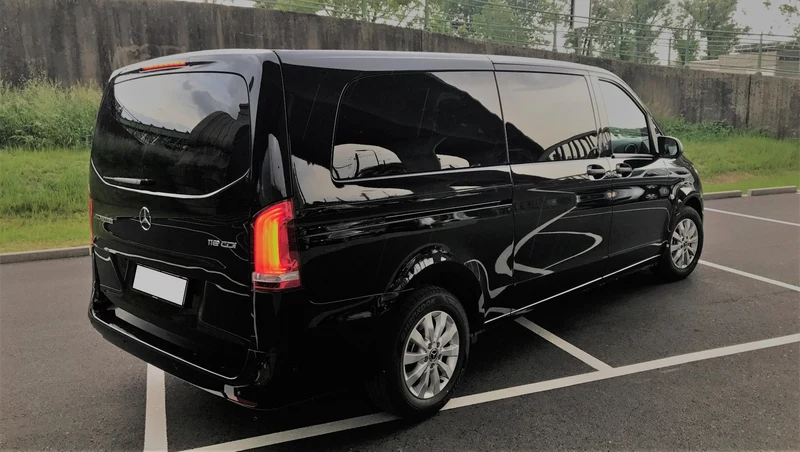
By train, FlixBus, or private transfer. The train from Wien Hauptbahnhof takes about 1 hour and costs €10–€15 with ÖBB. ATAV offers direct private transfers from Vienna (or Vienna Airport) to Bratislava — ideal for groups or anyone who wants a comfortable, door-to-door journey.
2. Salzburg — Mozart, Mountains & The Sound of Music (2.5 Hours)
Salzburg is Austria's most visited city after Vienna, and for good reason. Nestled between Alpine peaks and the Salzach River, it's the birthplace of Mozart, the filming location of The Sound of Music, and home to one of Europe's best-preserved medieval old towns.
What to see & do:
- Hohensalzburg Fortress — One of the largest medieval castles in Europe, towering above the city. Take the funicular up for stunning views.
- Getreidegasse — The famous shopping street with ornate wrought-iron guild signs. Mozart's birth house is at No. 9.
- Mirabell Palace & Gardens — Baroque palace featured in The Sound of Music. The gardens are free to enter.
- Salzburg Cathedral — Impressive baroque cathedral in the heart of the old town. Free entry.
- Salzburg Altstadt — The entire old town is a UNESCO World Heritage Site. Simply walking through it is the highlight.
How to get there:
By ÖBB train (2.5 hours, from about €10 with a Sparschiene saver fare up to €63.70–€67.70 for a standard second-class ticket booked online) or private transfer. The train is comfortable and scenic; a private transfer costs more per person, but it takes you from door to door, carries the whole group with its luggage and lets you set your own departure time.
3. Hallstatt — Austria's Fairy-Tale Village (3.5 Hours)
Hallstatt is often called the most photographed village in Austria — and once you see the pastel houses reflected in the mirror-still lake, you'll understand why. This tiny UNESCO World Heritage village sits on the shore of Lake Hallstatt, backed by towering Dachstein mountains.
What to see & do:
- Hallstatt Skywalk — A viewing platform 350 meters above the lake with jaw-dropping panoramas of the valley and surrounding Alps.
- Salt Mine (Salzwelten) — The world's oldest salt mine, with underground slides, a subterranean salt lake, and 7,000 years of mining history.
- Market Square (Marktplatz) — The iconic heart of the village, surrounded by traditional Alpine houses and the lakefront.
- Bone House (Beinhaus) — A small chapel containing over 600 painted skulls — a unique and slightly eerie tradition.
- Lake boat ride — Electric boats cruise the crystal-clear lake. The views back toward the village are unforgettable.
How to get there:
Hallstatt is notoriously difficult to reach by public transport. The train goes to Hallstatt station on the opposite side of the lake, requiring a ferry crossing. Total journey: 4+ hours with at least one change. A private transfer takes about 3.5 hours and lets you stop at scenic viewpoints along the way — a far more relaxed experience, especially for families or small groups. Note that cars cannot drive into the village centre: your driver drops you at the permitted stopping point, and the last few minutes are on foot.
4. Wachau Valley — Wine, History & the Danube (1 Hour)
The Wachau Valley is a UNESCO-listed stretch of the Danube between Melk and Krems, about an hour west of Vienna. It's Austria's premier wine region, famous for its Grüner Veltliner and Riesling. Rolling vineyards, medieval ruins, and charming river towns make this the perfect relaxed day trip.
What to see & do:
- Melk Abbey (Stift Melk) — A magnificent Baroque monastery perched on a cliff above the Danube. One of Austria's most important cultural landmarks.
- Dürnstein — A picturesque village with a blue-and-white baroque church, known as the place where Richard the Lionheart was imprisoned in 1192.
- Wine tasting — Dozens of Heurige (wine taverns) line the valley. Try the local Grüner Veltliner with a cold platter of Austrian specialties.
- Danube cycling path — One of Europe's most scenic bike routes runs through the valley. Rent a bike in Krems and ride to Melk (or vice versa).
- Danube river cruise — DDSG runs scenic boat trips between Krems and Melk through the heart of the valley, roughly from late March to the beginning of November, with tickets from €25. Low water on the Danube can suspend the Melk–Krems stretch, so check the operator's current notice before you plan your day around it.
How to get there:
By car or train to Krems or Melk (about 1 hour). A private transfer is ideal if you plan to visit multiple stops along the valley — your driver can wait while you explore Dürnstein, then take you to Melk Abbey, and bring you back to Vienna at the end of the day.
5. Budapest, Hungary — A Full Day in Another Capital (2.5 Hours)
Budapest is 2.5 hours southeast of Vienna — ambitious for a day trip, but absolutely doable if you start early. The Hungarian capital straddles the Danube, with historic Buda on one side and vibrant Pest on the other. It's one of Europe's most underrated cities.
What to see & do:
- Hungarian Parliament — One of the most stunning government buildings in the world, situated right on the Danube. Guided tours available.
- Széchenyi Thermal Baths — The largest medicinal bath complex in Europe. Bring a swimsuit and spend a few hours soaking in the outdoor pools.
- Buda Castle & Fisherman's Bastion — The castle district offers incredible views over the city and the Danube. The Bastion is especially beautiful at sunset.
- Ruin bars — Budapest's famous bars built inside abandoned buildings. Szimpla Kert is the original and most famous.
- Great Market Hall — Three floors of Hungarian food, spices, paprika, and souvenirs. Perfect for picking up gifts.
How to get there:
The ÖBB/MAV train from Wien Hauptbahnhof takes 2.5 hours and costs €19–€39 if booked in advance. Trains depart roughly every hour. A private transfer takes a similar time but offers the flexibility to leave when you want and stop along the way.
Planning Tips for Day Trips from Vienna
- Start early. For longer trips (Salzburg, Hallstatt, Budapest), aim to leave Vienna by 7–8 AM to maximize your time.
- Book train tickets in advance on oebb.at for the best prices. Last-minute tickets can cost 2–3x more.
- For groups of 3+, compare the per-person cost of a private transfer with individual train tickets. The transfer is usually the more expensive option, so choose it for the comfort, the luggage space and the flexible timing.
- Bratislava and Wachau are perfect half-day trips. You can leave after breakfast and be back for dinner in Vienna.
- Hallstatt gets extremely crowded in summer. Arriving by 9 AM (easier with a private transfer) means you beat the tour bus crowds.
- Bring photo ID (national ID card or passport) for Bratislava and Budapest: you're crossing into Slovakia and Hungary respectively. Both are in the Schengen area, but Austria has reintroduced border checks from 16 September 2026 until 15 March 2027 on its land borders and on the river border with Slovakia, so expect spot checks.
ATAV long-distance transfers: ATAV offers private transfers not just to Vienna Airport, but to destinations across Austria, Slovakia, and Hungary. Fixed prices, professional drivers, and door-to-door service. Perfect for day trips without the stress of navigating public transport.