Updated 15 October 2026. For this update we checked the Wiener Linien fares and ticket range (the 48-hour and 72-hour tickets no longer exist), the Vienna Airport Bus fares, and the S7, which now ends at Wien St. Marx instead of the city centre. The City Airport Train still runs as a bus rather than a train. Read the full guide to what runs now.
Getting From the Airport to the City
Vienna International Airport (VIE) is located about 18 kilometers southeast of the city center. It's a modern, well-organized airport — but the first decision every visitor faces is how to get into the city. You have several options, each with different trade-offs in terms of price, speed, and convenience. One step comes first for visitors from outside the EU on a short stay: the EU Entry/Exit System (EES) has been in full operation since 10 April 2026, so fingerprints and a facial image are recorded at the border instead of a passport stamp.
The City Airport Train (CAT) has run as a bus rather than a train since August 2026: 21 minutes to Wien Mitte, €14.90 single, €7 reduced, children under 15 free. The S-Bahn (S7) costs €5.50 but no longer reaches the city centre: since 7 September 2026 it ends at Wien St. Marx, and Wien Mitte and Rennweg cannot be reached by rail, expected to stay that way until the end of October 2027. From St. Marx you continue with tram 18 or 71, bus 74A, or walk about 10 minutes to the U3. The fastest option right now is the Railjet: 15 minutes to Wien Hauptbahnhof for €5.50. The Vienna Airport Bus (lines VAB 1 to VAB 5) runs to several points such as Westbahnhof and Schwedenplatz for €11 single and €20 return, taking 20–45 minutes depending on traffic and destination; no online discount is advertised.
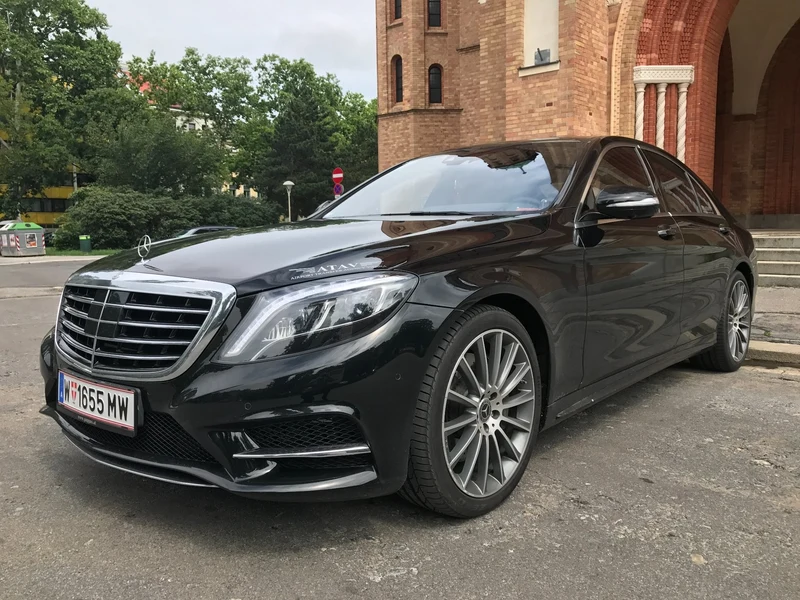
However, if you're traveling with luggage, children, or arriving late at night, a private airport transfer is by far the most comfortable option. ATAV offers a fixed-price transfer from Vienna Airport to any address in the city from €44 — no meters, no surge pricing, no navigating train platforms with heavy bags. Your driver meets you in the arrivals hall with a name sign, helps with your luggage, and takes you directly to your hotel or accommodation.
Public Transport in Vienna
Vienna has one of the best public transport systems in Europe, operated by Wiener Linien. The network includes five U-Bahn (metro) lines, trams, buses, and regional trains — all integrated under a single ticket system. It's clean, punctual, and runs from around 5:00 AM until midnight on weekdays, with 24-hour service on Friday and Saturday nights.
A single ticket costs €3.20 (€3.00 if you buy it digitally) and is valid for one journey in one direction, including transfers. If you plan to use public transport frequently, the 24-hour ticket (€10.20, or €9.70 digitally) or the 7-day ticket (€28.90, or €25.20 digitally) offer excellent value; the 48-hour and 72-hour tickets were withdrawn on 1 January 2026. You can buy tickets at machines in every U-Bahn station, at tobacco shops (Trafik), or through the Wiener Linien app.
One important note: you must validate your ticket before boarding. Ticket inspections are common and the fine for riding without a valid ticket is 105 EUR — no exceptions for tourists. The inspectors are plainclothes and will ask to see your ticket at random.
| Ticket Type | Price | Validity |
|---|---|---|
| Single ticket | €3.20 | One journey, one direction |
| 24-hour ticket | €10.20 | Unlimited rides for 24 hours |
| 7-day ticket | €28.90 | Unlimited rides for 7 days from validation |
Money & Payments
Austria uses the Euro (€) as its currency. Credit and debit cards are widely accepted in hotels, restaurants, shops, and supermarkets — Visa and Mastercard work virtually everywhere. However, Vienna is still more cash-oriented than some other Western European capitals. Smaller cafes, market stalls, and some traditional Heurigen (wine taverns) may only accept cash.
ATMs (called Bankomat in Austria) are plentiful throughout the city. Use bank-operated ATMs rather than independent ones to avoid excessive fees. Your home bank may charge a foreign transaction fee, so check before you travel.
Tipping customs: Tipping in Vienna is expected but not as aggressive as in North America. The standard practice is to round up the bill or add 5–10%. For example, if your restaurant bill is €27, you might round up to €30. In taxis and for hotel services, rounding up by a euro or two is customary. Tips are given directly to the server when paying, not left on the table.
Safety & Practical Tips
Vienna is consistently ranked as one of the safest cities in the world. Violent crime is extremely rare, and most neighborhoods are safe to walk through at any time of day or night. That said, common-sense precautions apply: keep an eye on your belongings in crowded tourist spots like Stephansplatz, Naschmarkt, and on public transport. Pickpocketing does occur, though far less frequently than in cities like Barcelona or Rome.
Tap water in Vienna is excellent. It comes from alpine springs in the Austrian Alps and is perfectly safe — and delicious — to drink straight from the tap. You don't need to buy bottled water. In restaurants, asking for "Leitungswasser" (tap water) is perfectly acceptable, though some traditional establishments may raise an eyebrow.
Emergency services: Dial 112 for the EU-wide emergency number, or 133 for police, 144 for ambulance, and 122 for fire services. Austria has an excellent healthcare system, and EU citizens should carry their European Health Insurance Card (EHIC). Non-EU visitors should ensure they have travel insurance.
Language
The official language is German — specifically Austrian German, which has some distinct vocabulary and pronunciation compared to German spoken in Germany. Don't worry if your German is rusty or nonexistent: English is widely spoken in hotels, restaurants, museums, and tourist areas. Younger Viennese in particular are often fluent in English.
That said, learning a few basic phrases goes a long way and is always appreciated. A simple "Guten Tag" (good day), "Bitte" (please), and "Danke" (thank you) will earn you smiles. When entering a shop or restaurant, locals typically greet with "Gruss Gott" — the traditional Austrian greeting that literally translates to "God's greeting" but functions as a casual hello.
Best Time to Visit Vienna
Spring (April–June) and autumn (September–October) are the ideal times to visit Vienna. Temperatures are pleasant, the parks are gorgeous, and the cultural calendar is packed with concerts, exhibitions, and festivals. Summer (July–August) can be quite hot, with temperatures regularly exceeding 30°C, and many Viennese leave the city for vacation — meaning some smaller restaurants and shops may close.
Winter (November–March) is cold — temperatures hover around 0°C and snow is common. But Vienna in winter has its own magic: the famous Christmas markets (Christkindlmärkte) run from early November through late December, with a few markets staying open into early January, transforming squares across the city into twinkling wonderlands of mulled wine, roasted chestnuts, and handcrafted gifts. The Vienna State Opera and concert halls are in full swing during the winter season, and New Year's Eve in Vienna is legendary.
Local Customs & Etiquette
Vienna is a city of culture and tradition, and locals appreciate visitors who respect a few unwritten rules. Here are the most important customs to keep in mind:
- Greeting: The standard greeting is "Grüß Gott" (hello) rather than "Hallo." Use it when entering shops, restaurants, and elevators. When leaving, say "Auf Wiedersehen" or simply "Wiedersehen."
- Sunday quiet: Austria takes Sundays seriously. Almost all shops are closed, and noise levels are expected to be low — especially in residential areas. Don't mow your lawn, drill walls, or play loud music on Sundays.
- No jaywalking: Austrians follow pedestrian traffic lights strictly. Crossing on a red light — even if there's no car in sight — will earn you disapproving looks and possibly a fine.
- Coffee culture: Vienna's coffee house tradition is UNESCO-listed. When you order a "Melange" (similar to a cappuccino), expect to sit for a while — lingering in a cafe for hours over a single coffee is not only accepted, it's encouraged.
- Dress code: Viennese tend to dress smartly. For the opera, theater, or fine dining, smart casual to formal attire is expected. You won't be refused entry in jeans, but you'll feel more comfortable if you dress up a bit.
- Recycling: Austria is serious about recycling. You'll find separate bins for paper, glass (sorted by color), plastic, and organic waste. Follow the system — it matters to locals.
Pro tip: Book your airport transfer before you fly. After a long journey, the last thing you want is to figure out train schedules, buy tickets, and navigate platforms with heavy luggage. With ATAV, your driver is already waiting at arrivals when you land — even if your flight is delayed. One less thing to worry about on your first visit to Vienna.
Related: Airport to City Center Guide · Transport Comparison · Taxi vs Uber