
Mis à jour le 21 août 2026. La liaison ferroviaire de l'aéroport de Vienne a changé : le City Airport Train circule en bus jusqu'à l'automne 2027 et le S7 n'atteint plus le centre-ville. Les prix et les durées de trajet ci-dessous sont à jour. Lire le guide complet de ce qui circule actuellement.
Se rendre de l'aéroport à la ville
L'aéroport international de Vienne (VIE) est situé à environ 18 kilomètres au sud-est du centre-ville. C'est un aéroport moderne et bien organisé — mais la première décision de chaque visiteur est de savoir comment rejoindre la ville. Vous avez plusieurs options, chacune avec des compromis différents en termes de prix, de vitesse et de commodité.
Le City Airport Train (CAT) circule en bus et non plus en train depuis août 2026 : 21 minutes jusqu'à Wien Mitte, 14,90 € l'aller simple, 7 € en tarif réduit, gratuit pour les moins de 15 ans. Le S-Bahn (S7) coûte 5,50 € mais n'atteint plus le centre-ville de façon fiable en raison de la fermeture de la ligne. Le plus rapide aujourd'hui est le Railjet, avec 15 minutes jusqu'à la gare centrale pour 5,50 €. Le bus Vienna Airport Lines dessert pour 8–9 € plusieurs endroits dont Westbahnhof et Schwedenplatz, en 20–45 minutes selon le trafic et votre destination.
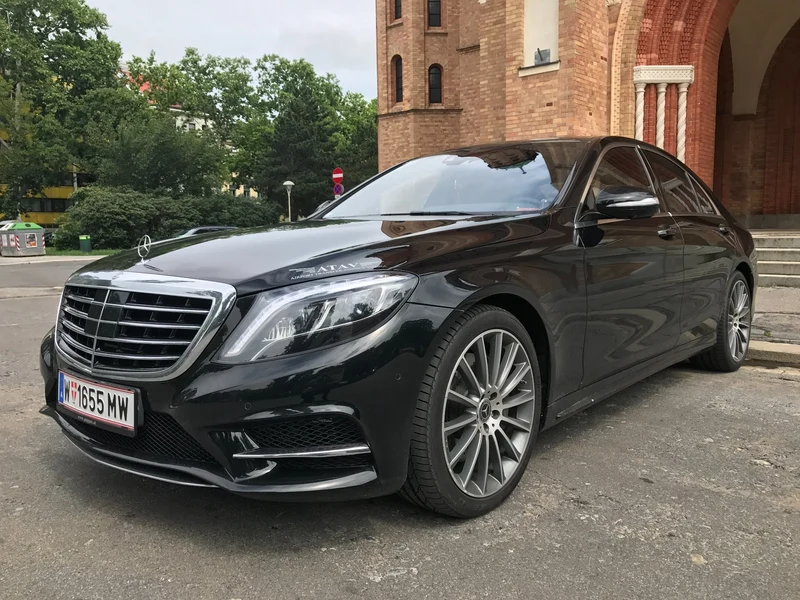
Cependant, si vous voyagez avec des bagages, des enfants ou que vous arrivez tard le soir, un transfert privé aéroport est de loin l'option la plus confortable. ATAV propose un transfert à prix fixe depuis l'aéroport de Vienne vers n'importe quelle adresse en ville pour seulement €44 — pas de compteur, pas de tarification dynamique, pas de quais de train à naviguer avec de lourds bagages. Votre chauffeur vous accueille dans le hall des arrivées avec un panneau à votre nom, aide avec vos bagages et vous conduit directement à votre hôtel ou hébergement.
Les transports en commun à Vienne
Vienne possède l'un des meilleurs réseaux de transport en commun d'Europe, exploité par Wiener Linien. Le réseau comprend cinq lignes de U-Bahn (métro), des tramways, des bus et des trains régionaux — tous intégrés dans un système de billetterie unique. Il est propre, ponctuel et fonctionne d'environ 5h00 à minuit en semaine, avec un service 24h/24 les vendredis et samedis soirs.
Un ticket simple coûte €2,40 et est valable pour un trajet dans une direction, correspondances incluses. Si vous prévoyez d'utiliser les transports en commun fréquemment, le ticket 24 heures (€8,00), le ticket 48 heures (€14,10) ou le ticket 72 heures (€17,10) offrent un excellent rapport qualité-prix. Vous pouvez acheter des tickets aux distributeurs dans chaque station de U-Bahn, dans les bureaux de tabac (Trafik) ou via l'application Wiener Linien.
Note importante : vous devez valider votre ticket avant de monter. Les contrôles de billets sont fréquents et l'amende pour voyager sans ticket valide est de 105 € — sans exception pour les touristes. Les contrôleurs sont en civil et vous demanderont votre ticket de manière aléatoire.
| Type de ticket | Prix | Validité |
|---|---|---|
| Ticket simple | €2.40 | Un trajet, une direction |
| Ticket 24 heures | €8.00 | Trajets illimités pendant 24 heures |
| Ticket 48 heures | €14.10 | Trajets illimités pendant 48 heures |
| Ticket 72 heures | €17.10 | Trajets illimités pendant 72 heures |
| Ticket hebdomadaire | €17.10 | Lun 00h00 à lun 09h00 |
Argent & paiements
L'Autriche utilise l'Euro (€) comme monnaie. Les cartes de crédit et de débit sont largement acceptées dans les hôtels, restaurants, boutiques et supermarchés — Visa et Mastercard fonctionnent pratiquement partout. Cependant, Vienne est encore plus orientée vers les espèces que certaines autres capitales d'Europe occidentale. Les petits cafés, les étals de marché et certains Heurigen traditionnels (tavernes à vin) peuvent n'accepter que les espèces.
Les distributeurs automatiques (appelés Bankomat en Autriche) sont nombreux dans toute la ville. Utilisez les distributeurs des banques plutôt que les distributeurs indépendants pour éviter des frais excessifs. Votre banque peut facturer des frais de transaction à l'étranger, vérifiez avant de partir.
Coutumes de pourboire : Le pourboire à Vienne est attendu mais pas aussi agressif qu'en Amérique du Nord. La pratique standard est d'arrondir la note ou d'ajouter 5–10 %. Par exemple, si votre addition au restaurant est de €27, vous pourriez arrondir à €30. Dans les taxis et pour les services hôteliers, arrondir d'un ou deux euros est de coutume. Les pourboires se donnent directement au serveur en payant, pas laissés sur la table.
Sécurité & conseils pratiques
Vienne se classe régulièrement parmi les villes les plus sûres du monde. Les crimes violents sont extrêmement rares, et la plupart des quartiers sont sûrs à parcourir à toute heure du jour ou de la nuit. Cela dit, les précautions de bon sens s'appliquent : gardez un œil sur vos affaires dans les lieux touristiques bondés comme Stephansplatz, Naschmarkt et dans les transports en commun. Les pickpockets sévissent, bien que bien moins fréquemment que dans des villes comme Barcelone ou Rome.
L'eau du robinet à Vienne est excellente. Elle provient des sources alpines des Alpes autrichiennes et est parfaitement potable — et délicieuse — directement au robinet. Vous n'avez pas besoin d'acheter de l'eau en bouteille. Au restaurant, demander de la « Leitungswasser » (eau du robinet) est tout à fait acceptable, bien que certains établissements traditionnels puissent faire les gros yeux.
Services d'urgence : composez le 112 pour le numéro d'urgence européen, ou le 133 pour la police, le 144 pour les ambulances et le 122 pour les pompiers. L'Autriche dispose d'un excellent système de santé, et les citoyens de l'UE devraient avoir leur Carte européenne d'assurance maladie (CEAM). Les visiteurs hors UE devraient s'assurer d'avoir une assurance voyage.
Langue
La langue officielle est l'allemand — plus précisément l'allemand autrichien, qui possède un vocabulaire et une prononciation distincts par rapport à l'allemand parlé en Allemagne. Ne vous inquiétez pas si votre allemand est rouillé ou inexistant : l'anglais est largement parlé dans les hôtels, restaurants, musées et zones touristiques. Les jeunes Viennois en particulier sont souvent parfaitement bilingues.
Cela dit, apprendre quelques phrases de base va loin et est toujours apprécié. Un simple « Guten Tag » (bonjour), « Bitte » (s'il vous plaît) et « Danke » (merci) vous vaudront des sourires. En entrant dans un magasin ou un restaurant, les habitants saluent typiquement par « Grüss Gott » — la salutation traditionnelle autrichienne qui signifie littéralement « salut de Dieu » mais fonctionne comme un bonjour décontracté.
Meilleure période pour visiter Vienne
Le printemps (avril–juin) et l'automne (septembre–octobre) sont les périodes idéales pour visiter Vienne. Les températures sont agréables, les parcs sont magnifiques et le calendrier culturel est rempli de concerts, d'expositions et de festivals. L'été (juillet–août) peut être assez chaud, avec des températures dépassant régulièrement 30°C, et de nombreux Viennois quittent la ville en vacances — ce qui signifie que certains petits restaurants et boutiques peuvent fermer.
L'hiver (novembre–mars) est froid — les températures tournent autour de 0°C et la neige est fréquente. Mais Vienne en hiver a sa propre magie : les célèbres marchés de Noël (Christkindlmärkte) se tiennent de mi-novembre à fin décembre, transformant les places de la ville en féeries scintillantes de vin chaud, de marrons grillés et d'artisanat. L'Opéra national de Vienne et les salles de concert battent leur plein pendant la saison hivernale, et le réveillon du Nouvel An à Vienne est légendaire.
Coutumes locales & étiquette
Vienne est une ville de culture et de tradition, et les habitants apprécient les visiteurs qui respectent quelques règles non écrites. Voici les coutumes les plus importantes à garder à l'esprit :
- Salutation : La salutation standard est « Grüß Gott » (bonjour) plutôt que « Hallo ». Utilisez-la en entrant dans les magasins, restaurants et ascenseurs. En partant, dites « Auf Wiedersehen » ou simplement « Wiedersehen ».
- Calme du dimanche : L'Autriche prend les dimanches au sérieux. Presque tous les magasins sont fermés, et le niveau de bruit doit être bas — surtout dans les zones résidentielles. Ne tondez pas la pelouse, ne percez pas les murs et ne jouez pas de musique forte le dimanche.
- Pas de traversée hors passage : Les Autrichiens respectent strictement les feux piétons. Traverser au rouge — même s'il n'y a aucune voiture en vue — vous vaudra des regards désapprobateurs et possiblement une amende.
- Culture du café : La tradition des cafés viennois est classée à l'UNESCO. Quand vous commandez un « Melange » (similaire à un cappuccino), attendez-vous à rester un moment — s'attarder dans un café pendant des heures autour d'un seul café n'est pas seulement accepté, c'est encouragé.
- Code vestimentaire : Les Viennois ont tendance à s'habiller avec élégance. Pour l'opéra, le théâtre ou la gastronomie, une tenue casual chic à formelle est attendue. On ne vous refusera pas l'entrée en jeans, mais vous vous sentirez plus à l'aise en vous habillant un peu.
- Recyclage : L'Autriche prend le recyclage au sérieux. Vous trouverez des poubelles séparées pour le papier, le verre (trié par couleur), le plastique et les déchets organiques. Suivez le système — c'est important pour les habitants.
Conseil pro : Réservez votre transfert aéroport avant de prendre l'avion. Après un long voyage, la dernière chose que vous voulez est de chercher les horaires de train, acheter des billets et naviguer dans les quais avec de lourds bagages. Avec ATAV, votre chauffeur vous attend déjà aux arrivées quand vous atterrissez — même si votre vol est retardé. Un souci en moins pour votre première visite à Vienne.
En rapport : Guide aéroport vers le centre-ville · Comparatif des transports · Taxi vs Uber