
Det korta svaret
Boka i ditt eget namn och skriv resenärens namn i kommentarsfältet — det namnet hamnar på skylten i ankomsthallen. Bekräftelsen går till din inkorg, inte till hans eller hennes, så att ändringar stannar i dina händer. Allt annat sköts via flygnumret: vi bevakar flyget, och en försening kostar ingenting.
Det enda du inte får glömma:
Skriv passagerarens namn i kommentarsfältet. Utan det står ditt namn på skylten — och din gäst går förbi en chaufför som håller upp ett främmande kort.
Vems namn som hamnar på skylten
Bokningsformuläret frågar efter ett namn, och det menar ditt — du är kontakten vi ringer när något ska avgöras. Den som faktiskt flyger hör hemma i kommentarsfältet, tillsammans med allt som chauffören bör veta: ”Passagerare: dr Ines Brandt, reser ensam, två resväskor.”
Den kommentaren läser chauffören innan han kör iväg, och med bokad Meet & Greet (€8) blir den namnet på skylten i ankomsthallen. Det är den detalj som oftast går fel när man bokar åt andra — och den som är lättast att få rätt.
Var bekräftelsen hamnar
Bekräftelsemailet går till den adress du bokade med. Vidarebefordra det till din resenär, så har han eller hon chaufförens uppgifter, det fasta priset och mötesplatsen i ett enda meddelande — användbart just när man landar utan roaming och med tomt batteri. Behåll originalet: varje ändring går via den adress som bokade.
När flyget flyttas och din resenär är i luften
Det är den situation som hela upplägget är byggt för: avgången flyttas två timmar, och den ende som skulle kunna berätta det för oss sitter på 10 000 meters höjd med avstängd telefon. Du behöver inte göra något. Vi följer flygnumret och flyttar upphämtningen med det.
Efter landningen finns 60 minuters fri väntetid (45 vid inrikesflyg), och det täcker en trög passkontroll eller en resväska som låter vänta på sig. En ombokning till ett annat flyg är det enda fall där du måste säga till — skicka det nya flygnumret, så följer upphämtningen med.
Hur fakturan når företaget
Vid en enstaka bokning begär du fakturan i kommentarsfältet och anger fakturanamn och adress — då får du en korrekt faktura för reseräkningen i stället för ett kortkvitto. Ordnar du transferer regelbundet lönar det sig att sätta upp det ordentligt en gång i stället för varje gång på nytt.
När det blir regelbundet
Från en handfull transferer i månaden ändrar ett företagskonto räkningen: en samlingsfaktura i stället för en hög kvitton, kostnadsställen per avdelning, flera behöriga bokare i samma konto och en namngiven kontaktperson som redan känner era sträckor. Vår Business-sida förklarar hur det sätts upp — det tar dagar, inte veckor.
Att välja bil åt någon annan
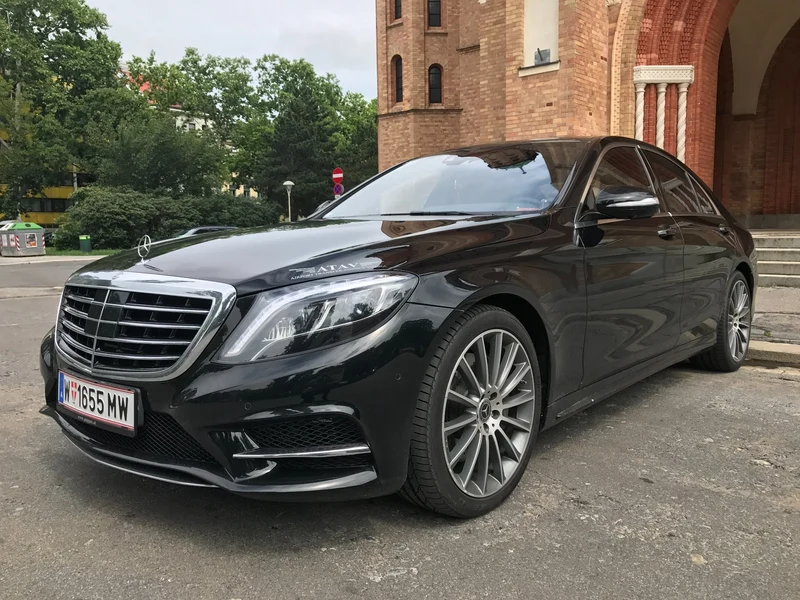
Två frågor avgör: hur mycket bagage, och vem som hämtas. En ensam resenär med handbagage in till stadskärnan sitter bra i en Economy för €44. För en kund eller en styrelsemedlem är E-Klass Business för €58 det val som ser rätt ut vid ankomsten; S-Klass First Class för €88 är till de tillfällen då ankomsten är en del av intrycket. Alla priser fasta, alla per fordon.
Diskretion och ändringar
Chaufförerna ser sträckan, namnet och din kommentar — inte mer, och de är vana vid gäster som hellre åker under tystnad. Avbokning är kostnadsfri fram till 24 timmar före upphämtningen; ett möte som spricker på torsdagen kostar alltså ingenting om bilen var beställd till lördagen.